

Are Abandonment Issues Ruining Your Love Life?
Are you always worried that people will leave? Begin a revolutionary therapist-led journey today to heal your abandonment wound, so you can live a happier, calmer, and more stable life!
Explore the same 1-on-1 exercises exclusively used by Stephanie Therapy in her therapy room to stop worrying that everyone will 'always leave'.
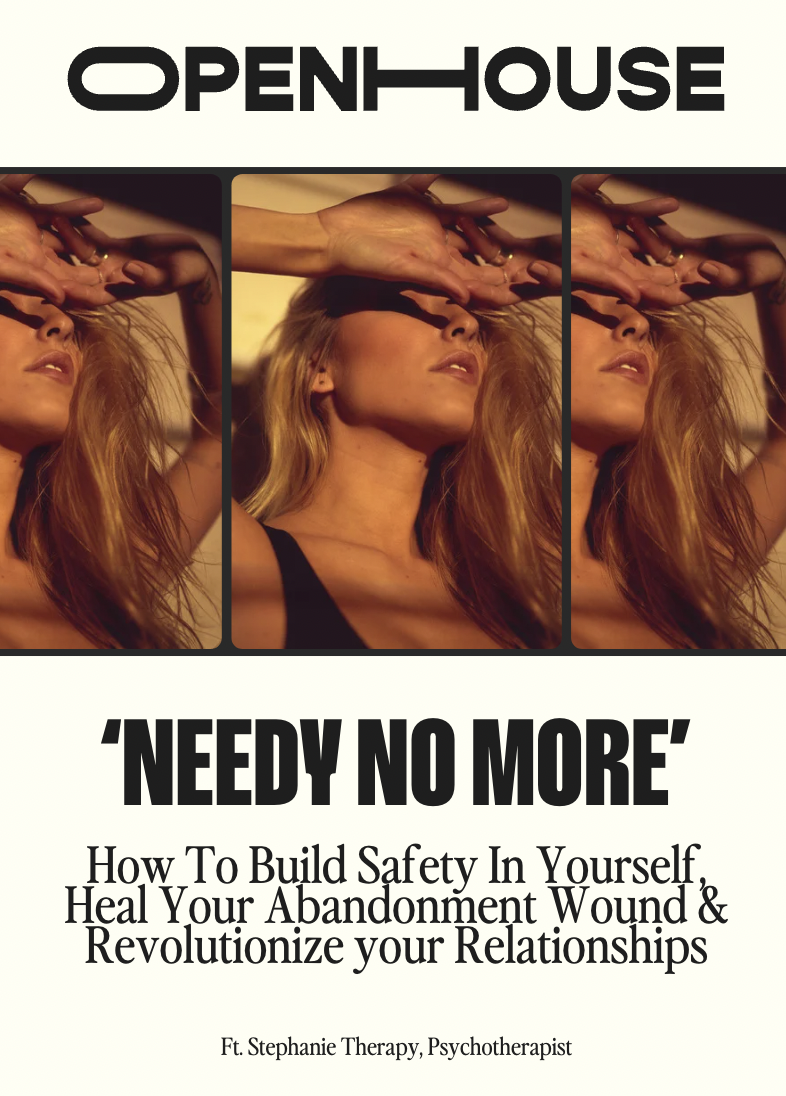
In this best-selling, 50-page e-guide, designed to help you understand and heal your abandonment wound, Stephanie Therapy takes you on a journey to replace the constant worry and nervous system stress of 'Are they going to leave?', 'Have they changed their mind?', and 'Am I good enough?' with a new belief system and a better understanding of the cycling of the abandonment cycle (and how you can break it).
WIth an abandonment wound quiz, 6 journalling tasks, an active 8 stage reflection and re wiring process and a recommendation for the one supplement we advise to help with neural re wiring and creating new thought patterns and beliefs, this is the ULTIMATE therapy backed guide to help you find safety from within to heal your abandonment wound and take a step forward towards happier, healthier, calmer, and more stable relationships.
The therapy guide covers:
Introduction: Meet your therapist, Stephanie.
What is the abandonment wound: Learn about the abandonment wound and its impact on your life.
Do you have the wound?: A self-assessment to determine your personal connection to this wound.
Understanding how the wound can form: Explore the factors that contribute to the development of the abandonment wound from childhood, adulthood, and beyond.
How did YOUR wound form?: Instructions for a guided meditation moment to delve into the origins of your personal abandonment wound.
Understanding the cycle of abandonment: Explore the recurring patterns and behaviors linked to the abandonment wound.
Understanding how your inner child fits into this cycle: Learn how your inner child plays a role in your responses to abandonment triggers.
What are your specific triggers?: Help you identify the unique situations or behaviors that activate your abandonment wound.
What are your specific fears?: Examine the fears that underlie your abandonment wound.
The 'This Feels Like When' analogy: An analogy usually saved for Stephanie’s 1-1 clients.
The 3 coping mechanisms for an abandonment wound: Explore common coping mechanisms that push you away from intimacy or pull you towards it.
How these coping mechanisms define your intimate experiences and whether you are choosing partners that help or hinder this: Reflect on whether your choice of partners supports your healing journey.
Pattern protesting: Recognize and address behaviors that perpetuate your abandonment wound.
Replacing protest behaviors with new beliefs and self-soothing: Learn strategies for replacing destructive patterns with self-soothing techniques.
The Ideal Abandonment Cycle: Envision a healthier cycle of abandonment and healing by understanding a healthy cycle.
How to create a new cycle: Practical steps to create a positive, healing cycle in your life, including how to communicate about your abandonment wound with loved ones.
Things that will stop you from healing the cycle.
Once you address your abandonment wound you can:
Live a calmer, more regulated life
Finally start to feel safer within yourself and your relationships
Transform the way you date and relate
Gain increased levels emotional stability in all aspects of your life
Feel more secure, confident, and at peace with yourself
Use your new confidence and sense of peace as a foundation to become a happier, healthier, and more attractive version of yourself!
Plus - Order Now & You’ll Receive Full Access to The House Community Group with 600 other Healing Honeys
Can you never relax in dating and love? Therapy teaches us that many of us have an 'Abandonment Wound’:
These wounds can end up impacting our lives dramatically and act as a barrier between us, our partners, and those around us.
Perhaps you lost a parent at an early age, maybe a loved one walked out on you, or perhaps you were raised by a succession of nannies or babysitters. Maybe someone you love treated you dismissively and shut you out.
Maybe none of these things happened but you have a nervous system that is sensitive to rejection
Whatever created your abandonment wound, you must now learn how to identify and heal that wound, or it could keep you from finding the love of your life and from having deep, meaningful relationships with those who are close to you.


Look for and obsess over signs that others may change their mind
Constantly feel like people might be changing their mind
Get told you’re too ‘needy’
Seek constant reassurance that others love you and aren’t going anywhere
Try to please others so they are happy with you and stick around
Give “too much” in a relationship
Push people away by being ‘too clingy’
Stay in unhealthy relationships for fear of being alone
Avoid conflict so you don’t get hurt
Jump from relationship to relationship
Do you ever do any of the following:
If you said ‘yes’ to any of the above statements you could very well have an abandonment wound that needs to be addressed!
Failure to do so could lead to self-sabotaging love, pushing people away without meaning to, avoidance of intimate relationships, isolation, unhappiness, loneliness, and so much more.
That’s because an abandonment wound often leads to a prolonged sense of emotional isolation that women, and men, then attempt to cover up and overcompensate for every day in their romantic, platonic, and professional lives!
Nobody should have to go through life that way.


The ‘Ultimate Healing Guide’ includes:
A quiz to assess the severity of the wound and experience
6 common ways that abandonment wounds are formed and the tie to your nervous system
The six stages of the Abandonment Cycle
The three main coping mechanisms people use to deal with an abandonment wound
How to re-write your abandonment cycle
The ‘This Feels Like When’ analogy
And much, much more
In this best-selling, 50-page e-guide, designed to help you understand and heal your abandonment wound, Stephanie Therapy takes you on a journey to replace the constant worry and nervous system stress of 'Are they going to leave?', 'Have they changed their mind?', and 'Am I good enough?' with a new belief system and a better understanding of the cycling of the abandonment cycle (and how you can break it).
WIth an abandonment wound quiz, 6 journalling tasks, an active 8 stage reflection and re wiring process and a recommendation for the one supplement we advise to help with neural re wiring and creating new thought patterns and beliefs, this is the ULTIMATE therapy backed guide to help you find safety from within to heal your abandonment wound and take a step forward towards happier, healthier, calmer, and more stable relationships.
The therapy guide covers:
Introduction: Meet your therapist, Stephanie.
What is the abandonment wound: Learn about the abandonment wound and its impact on your life.
Do you have the wound?: A self-assessment to determine your personal connection to this wound.
Understanding how the wound can form: Explore the factors that contribute to the development of the abandonment wound from childhood, adulthood, and beyond.
How did YOUR wound form?: Instructions for a guided meditation moment to delve into the origins of your personal abandonment wound.
Understanding the cycle of abandonment: Explore the recurring patterns and behaviors linked to the abandonment wound.
Understanding how your inner child fits into this cycle: Learn how your inner child plays a role in your responses to abandonment triggers.
What are your specific triggers?: Help you identify the unique situations or behaviors that activate your abandonment wound.
What are your specific fears?: Examine the fears that underlie your abandonment wound.
The 'This Feels Like When' analogy: An analogy usually saved for Stephanie’s 1-1 clients.
The 3 coping mechanisms for an abandonment wound: Explore common coping mechanisms that push you away from intimacy or pull you towards it.
How these coping mechanisms define your intimate experiences and whether you are choosing partners that help or hinder this: Reflect on whether your choice of partners supports your healing journey.
Pattern protesting: Recognize and address behaviors that perpetuate your abandonment wound.
Replacing protest behaviors with new beliefs and self-soothing: Learn strategies for replacing destructive patterns with self-soothing techniques.
The Ideal Abandonment Cycle: Envision a healthier cycle of abandonment and healing by understanding a healthy cycle.
How to create a new cycle: Practical steps to create a positive, healing cycle in your life, including how to communicate about your abandonment wound with loved ones.
Things that will stop you from healing the cycle.
Once you address your abandonment wound you can:
Live a calmer, more regulated life
Finally start to feel safer within yourself and your relationships
Transform the way you date and relate
Gain increased levels emotional stability in all aspects of your life
Feel more secure, confident, and at peace with yourself
Use your new confidence and sense of peace as a foundation to become a happier, healthier, and more attractive version of yourself!
Plus - Order Now & You’ll Receive Full Access to The House Community Group with 600 other Healing Honeys
Plus, this powerful e-guide includes:
An Abandonment Wound Quiz so you can accurately determine the intensity and origin of your abandonment wound
6 Journaling Tasks to help you understand your own personal abandonment cycle
An active 8-stage reflection and rewiring exercise
Plus:
20% off the one supplement we advise to help with neural rewiring and creating new thought patterns and beliefs
In this best-selling, 50-page e-guide, designed to help you understand and heal your abandonment wound, Stephanie Therapy takes you on a journey to replace the constant worry and nervous system stress of 'Are they going to leave?', 'Have they changed their mind?', and 'Am I good enough?' with a new belief system and a better understanding of the cycling of the abandonment cycle (and how you can break it).
WIth an abandonment wound quiz, 6 journalling tasks, an active 8 stage reflection and re wiring process and a recommendation for the one supplement we advise to help with neural re wiring and creating new thought patterns and beliefs, this is the ULTIMATE therapy backed guide to help you find safety from within to heal your abandonment wound and take a step forward towards happier, healthier, calmer, and more stable relationships.
The therapy guide covers:
Introduction: Meet your therapist, Stephanie.
What is the abandonment wound: Learn about the abandonment wound and its impact on your life.
Do you have the wound?: A self-assessment to determine your personal connection to this wound.
Understanding how the wound can form: Explore the factors that contribute to the development of the abandonment wound from childhood, adulthood, and beyond.
How did YOUR wound form?: Instructions for a guided meditation moment to delve into the origins of your personal abandonment wound.
Understanding the cycle of abandonment: Explore the recurring patterns and behaviors linked to the abandonment wound.
Understanding how your inner child fits into this cycle: Learn how your inner child plays a role in your responses to abandonment triggers.
What are your specific triggers?: Help you identify the unique situations or behaviors that activate your abandonment wound.
What are your specific fears?: Examine the fears that underlie your abandonment wound.
The 'This Feels Like When' analogy: An analogy usually saved for Stephanie’s 1-1 clients.
The 3 coping mechanisms for an abandonment wound: Explore common coping mechanisms that push you away from intimacy or pull you towards it.
How these coping mechanisms define your intimate experiences and whether you are choosing partners that help or hinder this: Reflect on whether your choice of partners supports your healing journey.
Pattern protesting: Recognize and address behaviors that perpetuate your abandonment wound.
Replacing protest behaviors with new beliefs and self-soothing: Learn strategies for replacing destructive patterns with self-soothing techniques.
The Ideal Abandonment Cycle: Envision a healthier cycle of abandonment and healing by understanding a healthy cycle.
How to create a new cycle: Practical steps to create a positive, healing cycle in your life, including how to communicate about your abandonment wound with loved ones.
Things that will stop you from healing the cycle.
Once you address your abandonment wound you can:
Live a calmer, more regulated life
Finally start to feel safer within yourself and your relationships
Transform the way you date and relate
Gain increased levels emotional stability in all aspects of your life
Feel more secure, confident, and at peace with yourself
Use your new confidence and sense of peace as a foundation to become a happier, healthier, and more attractive version of yourself!
Plus - Order Now & You’ll Receive Full Access to The House Community Group with 600 other Healing Honeys
This 50-page interactive Therapy Guide is
Written by therapist Stephanie Therapy, a leading childhood attachment and trauma expert, who excels in helping individuals through trauma recovery and unraveling the intricacies of their core childhood wounds.
Being published by OPENHOUSE, one of the leading mental health and dating podcasts in the world, founded by ‘The Therapy Girl’, Louise Rumball. OPENHOUSE’s e-guides and podcasts have reached over 2 million people and counting.
Once you address your abandonment wound you can:
Finally start to feel safer within yourself and your relationships
Gently guide your nervous system to work for you, not against you
Transform the way you date
Transform the way you feel about yourself
Gain emotional stability
Feel more secure, confident, and at peace with yourself
Use your new confidence and sense of peace as a foundation to become a happier, healthier, and more attractive version of yourself!


In this best-selling, 50-page e-guide, designed to help you understand and heal your abandonment wound, Stephanie Therapy takes you on a journey to replace the constant worry and nervous system stress of 'Are they going to leave?', 'Have they changed their mind?', and 'Am I good enough?' with a new belief system and a better understanding of the cycling of the abandonment cycle (and how you can break it).
WIth an abandonment wound quiz, 6 journalling tasks, an active 8 stage reflection and re wiring process and a recommendation for the one supplement we advise to help with neural re wiring and creating new thought patterns and beliefs, this is the ULTIMATE therapy backed guide to help you find safety from within to heal your abandonment wound and take a step forward towards happier, healthier, calmer, and more stable relationships.
The therapy guide covers:
Introduction: Meet your therapist, Stephanie.
What is the abandonment wound: Learn about the abandonment wound and its impact on your life.
Do you have the wound?: A self-assessment to determine your personal connection to this wound.
Understanding how the wound can form: Explore the factors that contribute to the development of the abandonment wound from childhood, adulthood, and beyond.
How did YOUR wound form?: Instructions for a guided meditation moment to delve into the origins of your personal abandonment wound.
Understanding the cycle of abandonment: Explore the recurring patterns and behaviors linked to the abandonment wound.
Understanding how your inner child fits into this cycle: Learn how your inner child plays a role in your responses to abandonment triggers.
What are your specific triggers?: Help you identify the unique situations or behaviors that activate your abandonment wound.
What are your specific fears?: Examine the fears that underlie your abandonment wound.
The 'This Feels Like When' analogy: An analogy usually saved for Stephanie’s 1-1 clients.
The 3 coping mechanisms for an abandonment wound: Explore common coping mechanisms that push you away from intimacy or pull you towards it.
How these coping mechanisms define your intimate experiences and whether you are choosing partners that help or hinder this: Reflect on whether your choice of partners supports your healing journey.
Pattern protesting: Recognize and address behaviors that perpetuate your abandonment wound.
Replacing protest behaviors with new beliefs and self-soothing: Learn strategies for replacing destructive patterns with self-soothing techniques.
The Ideal Abandonment Cycle: Envision a healthier cycle of abandonment and healing by understanding a healthy cycle.
How to create a new cycle: Practical steps to create a positive, healing cycle in your life, including how to communicate about your abandonment wound with loved ones.
Things that will stop you from healing the cycle.
Once you address your abandonment wound you can:
Live a calmer, more regulated life
Finally start to feel safer within yourself and your relationships
Transform the way you date and relate
Gain increased levels emotional stability in all aspects of your life
Feel more secure, confident, and at peace with yourself
Use your new confidence and sense of peace as a foundation to become a happier, healthier, and more attractive version of yourself!
Plus - Order Now & You’ll Receive Full Access to The House Community Group with 600 other Healing Honeys
So you can finally stop:
Worrying everyone will leave
Feeling that you’re ‘too much'
Constantly feel anxious, triggered & panicked in dating ore relationships
Overthinking and cringing about things you say or do
Feeling horrible when faced with silence
All without:
Months of paying for expensive and inaccessible 1-1 therapy
The struggle of finding a therapist right for you
Wasting your time jumping from relationship to relationship, hoping the next person will be “the one”
Total Value of This Package is $136
But Act Now & You Can Get It All for Just $19.99!
We are so sure that you will love “The Abandonment Wound” e-guide that we are offering an unconditional 100% money-back guarantee within 7 days of purchasing.

Created for you by leading childhood attachment and trauma expert, Stephanie Therapy
Stephanie’s approach blends evidence-based practices with compassionate guidance. Stephanie is a skilled guide in helping you to break the generational cycles your parents couldn't.



TRUE HEALING
TRUE HEALING
Start on your journey to building safety in yourself, healing your abandonment wound and revolutionizing your relationships with Stephanie Therapy and The Therapy Girl
In this best-selling, 50-page e-guide, designed to help you understand and heal your abandonment wound, Stephanie Therapy takes you on a journey to replace the constant worry and nervous system stress of 'Are they going to leave?', 'Have they changed their mind?', and 'Am I good enough?' with a new belief system and a better understanding of the cycling of the abandonment cycle (and how you can break it).
WIth an abandonment wound quiz, 6 journalling tasks, an active 8 stage reflection and re wiring process and a recommendation for the one supplement we advise to help with neural re wiring and creating new thought patterns and beliefs, this is the ULTIMATE therapy backed guide to help you find safety from within to heal your abandonment wound and take a step forward towards happier, healthier, calmer, and more stable relationships.
The therapy guide covers:
Introduction: Meet your therapist, Stephanie.
What is the abandonment wound: Learn about the abandonment wound and its impact on your life.
Do you have the wound?: A self-assessment to determine your personal connection to this wound.
Understanding how the wound can form: Explore the factors that contribute to the development of the abandonment wound from childhood, adulthood, and beyond.
How did YOUR wound form?: Instructions for a guided meditation moment to delve into the origins of your personal abandonment wound.
Understanding the cycle of abandonment: Explore the recurring patterns and behaviors linked to the abandonment wound.
Understanding how your inner child fits into this cycle: Learn how your inner child plays a role in your responses to abandonment triggers.
What are your specific triggers?: Help you identify the unique situations or behaviors that activate your abandonment wound.
What are your specific fears?: Examine the fears that underlie your abandonment wound.
The 'This Feels Like When' analogy: An analogy usually saved for Stephanie’s 1-1 clients.
The 3 coping mechanisms for an abandonment wound: Explore common coping mechanisms that push you away from intimacy or pull you towards it.
How these coping mechanisms define your intimate experiences and whether you are choosing partners that help or hinder this: Reflect on whether your choice of partners supports your healing journey.
Pattern protesting: Recognize and address behaviors that perpetuate your abandonment wound.
Replacing protest behaviors with new beliefs and self-soothing: Learn strategies for replacing destructive patterns with self-soothing techniques.
The Ideal Abandonment Cycle: Envision a healthier cycle of abandonment and healing by understanding a healthy cycle.
How to create a new cycle: Practical steps to create a positive, healing cycle in your life, including how to communicate about your abandonment wound with loved ones.
Things that will stop you from healing the cycle.
Once you address your abandonment wound you can:
Live a calmer, more regulated life
Finally start to feel safer within yourself and your relationships
Transform the way you date and relate
Gain increased levels emotional stability in all aspects of your life
Feel more secure, confident, and at peace with yourself
Use your new confidence and sense of peace as a foundation to become a happier, healthier, and more attractive version of yourself!
Plus - Order Now & You’ll Receive Full Access to The House Community Group with 600 other Healing Honeys
In this best-selling, 50-page e-guide, designed to help you understand and heal your abandonment wound, Stephanie Therapy takes you on a journey to replace the constant worry and nervous system stress of 'Are they going to leave?', 'Have they changed their mind?', and 'Am I good enough?' with a new belief system and a better understanding of the cycling of the abandonment cycle (and how you can break it).
WIth an abandonment wound quiz, 6 journalling tasks, an active 8 stage reflection and re wiring process and a recommendation for the one supplement we advise to help with neural re wiring and creating new thought patterns and beliefs, this is the ULTIMATE therapy backed guide to help you find safety from within to heal your abandonment wound and take a step forward towards happier, healthier, calmer, and more stable relationships.
The therapy guide covers:
Introduction: Meet your therapist, Stephanie.
What is the abandonment wound: Learn about the abandonment wound and its impact on your life.
Do you have the wound?: A self-assessment to determine your personal connection to this wound.
Understanding how the wound can form: Explore the factors that contribute to the development of the abandonment wound from childhood, adulthood, and beyond.
How did YOUR wound form?: Instructions for a guided meditation moment to delve into the origins of your personal abandonment wound.
Understanding the cycle of abandonment: Explore the recurring patterns and behaviors linked to the abandonment wound.
Understanding how your inner child fits into this cycle: Learn how your inner child plays a role in your responses to abandonment triggers.
What are your specific triggers?: Help you identify the unique situations or behaviors that activate your abandonment wound.
What are your specific fears?: Examine the fears that underlie your abandonment wound.
The 'This Feels Like When' analogy: An analogy usually saved for Stephanie’s 1-1 clients.
The 3 coping mechanisms for an abandonment wound: Explore common coping mechanisms that push you away from intimacy or pull you towards it.
How these coping mechanisms define your intimate experiences and whether you are choosing partners that help or hinder this: Reflect on whether your choice of partners supports your healing journey.
Pattern protesting: Recognize and address behaviors that perpetuate your abandonment wound.
Replacing protest behaviors with new beliefs and self-soothing: Learn strategies for replacing destructive patterns with self-soothing techniques.
The Ideal Abandonment Cycle: Envision a healthier cycle of abandonment and healing by understanding a healthy cycle.
How to create a new cycle: Practical steps to create a positive, healing cycle in your life, including how to communicate about your abandonment wound with loved ones.
Things that will stop you from healing the cycle.
Once you address your abandonment wound you can:
Live a calmer, more regulated life
Finally start to feel safer within yourself and your relationships
Transform the way you date and relate
Gain increased levels emotional stability in all aspects of your life
Feel more secure, confident, and at peace with yourself
Use your new confidence and sense of peace as a foundation to become a happier, healthier, and more attractive version of yourself!
Plus - Order Now & You’ll Receive Full Access to The House Community Group with 600 other Healing Honeys
Meet the future you
FAQs
What’s your refund policy?
We have a 30 refund policy. We’ve put a lot of time and effort into this resource, so we’re confident you’ll find a lot of value in it. If you aren’t completely satisfied, simply email us at louise@thisisopenhouse.com with your experience and we’ll refund you in full.
CAN I BUY THIS IF I AM IN A RELATIONSHIP?
Yes. This guide will help you better understand yourself, how your abandonment wound formed, the ties to your nervous system, the abandonment cycle, and the new 'healed' cycle you will be working towards when you understand your triggers, fears, protest behaviors, coping mechanisms, and more. These learnings will benefit you whether you are single, actively dating, or in a long-term relationship.
Why isn’t this resource free?
There are two reasons. The first and most important is that by making a small investment into your well-being, you’re much more likely to go through a resource than if you received it for free. We want this guide to make a difference in the lives of people living with an anxious attachment style, and paying for something is often just what we need. The second reason is that we’ve invested a great amount of time and money into putting it together, including hiring Stephanie Therapy and a graphic designer, editor, proof reader, landing page designer, etc, and we need to cover those costs.
What kind of support or follow-up resources are available after I've read the guide?
Your purchase includes a membership for the invite-only The House group – a safe space where over 600 members and our talented therapists help members on their healing journeys.